
Many hunters mistake getting fit for a mountain hunt for a matter to be addressed in the shortest time possible before departure. A gradual walking routine lets you test your equipment and get used to the decisions you will need to make during a mountain trip. Ultimately, your objective must be to be able to make decisions during your hunt rather than simply to arrive at the end of the trail feeling fit.
Develop a Steady Walking Routine
Start off walking on flat surfaces that can provide some challenge but in general are not too tough for early day walking. Try to establish a training habit and note how your joints feel between each walking session. Start to build up the walking distance between each session and focus on building up your endurance rather than trying to complete a challenging workout each time you go out for a walk.
As you progress in your training to develop walking fitness, gradually add new challenges to your walks over time. This also applies to your mileage. Initially, you can for example extend the duration of your walks on flat surfaces. Then you add inclines or finally even a light daypack. Do not confuse a lot of different demands with good training. More often than not, people believe that all kinds of pain is good for you. But in reality, almost all kinds of pain during physical activities are bad for you and even indicate that you might be suffering from injuries.
Every successful walking session needs to leave you feeling slightly worn out but NOT exhausted. You should avoid resorting to changing your stride to attempt to alleviate ongoing soreness or even sharp pain whilst out on your training sessions. Gradually increase the demands that you put on your joints over time but DO NOT repeat the same session that caused any of these types of problems in the first place. Seek the advice of your medical professional for ongoing pain.
Train on Varied Terrain for Mountain Readiness
Most people understand the concept of training for "downhill walking" on rough surface. Often these surfaces have loose ground, roots, rocks and even steep downhill slopes. It is vital to include such varied terrain in your walking training as you need to maintain balance and control with your joints. Once you have got into regular walking then look for varied routes such as tracks and trails across safe surfaces to improve your lower body joints for balance and stability on uneven surfaces.
Be very careful on your down slopes. Although they may look easy, steep downhill walking can be very hard on your joints, and can be very tiring. Think about your stride length and keep your body centralized over your feet in order to maintain balance. If you have used trekking poles before, bring them with you, but make sure you have used them before your hunt. While it's easy to add new gear to your back for your training walks, you don't want to find out that new item causes problems when you're out in the mountains.
Don't get confined to static endurance training for walking. Mountain hunting involves all sorts of abrupt changes in activity and sudden stops, reverses and sharp turns. Add all sorts of different movements to your training in a random order in order to adequately prepare your body for what to expect.
Gradually Add Weight with Your Pack
Gradually begin to incorporate your actual gear into your training by starting with your pack feeling light and then slowly increasing the amount of weight as you continue on. Pay close attention to how your pack is going to fit while you are moving and identify any hot spots where there will be chafing or sore spots. Make any necessary adjustments to the gear prior to your hunting trip.
However, do not overload your pack with unnecessary gear. Get advice from your guide or outfitter as to what you will actually need on your hunt and sharing gear is often the key to successful hunting. Obviously, items of water, spare clothing, optics etc. will be necessary but there is nothing worse than being comfortable on long days in the field and having your pack cause you problems when you really need to be able to move.
Be sure to build up your training in a progressive manner to avoid damage to your joints and, in particular, your back. This means paying close attention to how your pack is fitting and what you are including in it. If you find that you are experiencing pain or that your gait is being affected by your pack then you need to reassess what you are carrying and make some appropriate changes.
Foster Decision-Making Skills Through Your Training
If we are physically tired then our ability to make good decisions on the trail is going to suffer dramatically. This is especially critical in high-pressure situations, when we may be forced to make split second decisions. In order to avoid having to make hurried or 'crappy' decisions we need to be able to take regular breaks to regain our strength and sharpen our minds.
The idea to do an assessment of your physical condition during a break from your walk is crucial. Evaluate your physical state by asking yourself a few simple questions: Are you breathing normal? Are your feet still under you? Would you be able to handle a steep descent? Look for signs of wear and tear such as: headaches, extreme tiredness, dizziness or pain in your chest. These warning signs should not be ignored during your training sessions.
Don't be afraid to let your guide know how you're feeling during the hunting trip. They will be able to tell how you're doing in relation to the rest of the group and try to make the best of the situation. That may mean returning to camp early or waiting in a safe location for a time rather than risking further fatigue.
Recovery is Key to Progress
If you are to achieve improvements in your fitness then your recovery must be prioritised also. Long walks need to be followed by adequate periods of rest and subsequently by short easy walks until the stiffness in the joints from previous long walks has gone. Also, do not try to fit in too many long hard walks on top of each other as this will result in severe soreness and possible damage to muscles etc. Even light stretching of muscles is not recommended as it can in some cases result in further damage.
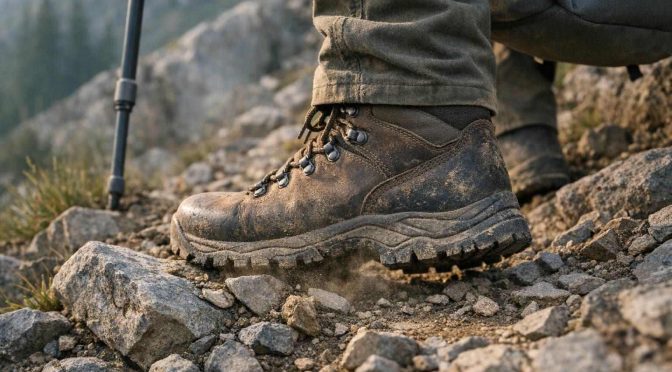
Also, remember to take care of your feet. Break in your new hiking boots and test out your new hiking socks on your training hikes. The worst thing that can happen is a painful blister on an overnight trip that could have been prevented with normal use on a training hike. Test out all your new gear in normal training situations before taking it on a long trip.
In the final few weeks prior to your hunt, scale back your intensity and stop trying to fit in more hard work. It is far better to show up somewhat undertrained but fully rested than to arrive injured and unable to truly experience your hunt.
Ethical Hunting Begins with Fitness Preparation
Yes, it is very important that a hunter be physically fit in order to hunt safely and humanely. Staying fit will help a hunter to be more patient when necessary. He will have more endurance to move in mountainous country and to inspect game that has been shot. His more fit body will help him to make good decisions in difficult situations. A physically fit hunter will be able to handle all of his equipment in good order while safely moving through the wilderness.
Be up to date on the latest hunting laws and safety measures prior to your trip. Also, bring up matters relating to the handling of wounded animals, risk and difficult terrain with your guide prior to your trip to be well prepared and make for a solid and effective training program.
Engaging in regular walking will not guarantee smooth traveling through mountains but it does equip a hunter with good ability to make decisions, to communicate adequately and to be respectful of wildlife, the terrain and fellow hunters. So include this type of training in your pre-season preparation.